

For Oahu airport transportation vehicle types in 2026, choose a private sedan for a straightforward arrival with light luggage, a passenger van for a group traveling together, and a coach for an organized delegation. A welcoming arrival starts with matching your vehicle to your passengers, bags, and destination—not choosing the largest vehicle.
- Among Oahu airport transportation vehicle types, private sedans are the default for travelers with light luggage.
- Passenger vans suit shared airport transfers; coaches suit organized groups with a coordinated itinerary.
- Choose an SUV for luggage flexibility or a limousine when the arrival itself is part of an occasion.
- Luxortrans suits travelers seeking discreet VIP airport transportation and coordinated Oahu group travel.
Why your airport vehicle choice matters
Your airport transfer needs to accommodate the trip you actually booked. A couple heading directly to a hotel has a different brief from a wedding party carrying formalwear or a corporate group arriving on separate flights.
Luxortrans provides Oahu airport, hotel, and private-event transportation, including limousines, taxis, and coaches. Transportation service, phone support, and reservations operate 24 hours a day; those operating hours do not guarantee a particular vehicle or pickup time.
For a 2026 arrival, choose the vehicle category first, then confirm the specific vehicle and pickup arrangement. A category name alone does not establish luggage space, passenger capacity, or how your airport meeting will work.
What makes the right Oahu airport transportation vehicle
Use these criteria before comparing vehicle types. Your strongest choice is the one that fits the whole transfer, including the return journey.
- Passenger fit: Give the provider your full passenger count, including children. Confirm seating against the assigned vehicle rather than a generic category description.
- Luggage fit: Describe checked bags, carry-ons, strollers, mobility equipment, and oversized items. Seating capacity and luggage capacity are different questions.
- Pickup coordination: Ask where you will meet, whom you should contact after landing, and what happens if flight details change.
- Travel purpose: Separate a practical hotel transfer from a VIP arrival, wedding journey, or corporate itinerary. The occasion changes your priorities.
- Group continuity: Decide whether everyone needs to travel together. Keeping a group in one vehicle simplifies coordination, but only when passengers and bags fit.
- Access needs: Explain boarding assistance, child-restraint needs, and mobility requirements before selecting a vehicle. Confirm the actual arrangement rather than relying on the vehicle label.
For 2026 planning, keep these requirements in one written brief. It gives your travel agent, concierge, or transportation provider a clear basis for recommending a vehicle.
Oahu airport transportation vehicle types at a glance
The ranking below starts with individual travel, then moves through larger parties and purpose-specific arrivals. It is a decision guide, not a claim that one category serves every traveler better.
| Rank and vehicle type | Best for | Standout feature | Key limitation |
|---|---|---|---|
| 1. Private sedan | Individuals or couples with light luggage | A dedicated transfer without unnecessary vehicle size | Limited flexibility for bulky luggage |
| 2. SUV | Families carrying bulky travel items | A larger vehicle format to assess for passengers and bags | Usable luggage space depends on occupied seats |
| 3. Passenger van | A shared party traveling together | Passenger seating organized around group travel | Seating does not establish baggage capacity |
| 4. Coach | Organized delegations and event groups | A common vehicle for a coordinated group movement | Needs a clear manifest and destination access plan |
| 5. Limousine | Occasion-led arrivals | A distinct setting for a celebratory or VIP journey | The vehicle format does not guarantee generous luggage space |
| 6. Taxi | Independent travelers making a simple transfer | A direct point-to-point option | The category alone does not define vehicle size or amenities |
1. Private sedan: best for individuals with light luggage
A private sedan is the default starting point for an individual or couple traveling directly from the airport to a hotel. You avoid planning around extra seating you do not need and can focus on the meeting instructions, destination, and luggage fit.
Choose this category when your belongings are straightforward to describe. If you are carrying bulky equipment, do not assume a sedan will accommodate it simply because the passenger count is small. Confirm the assigned vehicle before booking.
Private sedan pros:
- Suits a direct airport-to-hotel itinerary.
- Keeps a small party together in a dedicated vehicle.
- Gives individual travelers a clear alternative to group transportation.
Private sedan cons:
- Bulky luggage can change the vehicle requirement.
- Additional passengers can reduce flexibility for bags.
- The category does not establish boarding accessibility.
Best for: Individuals and couples whose passengers and luggage fit the confirmed vehicle.
Verdict: Buy a private sedan transfer when your luggage brief is simple and you do not need group seating.
2. SUV: best for families carrying bulky travel items
An SUV is a useful category to consider when your airport journey includes a stroller, larger bags, or other awkward items. Its value is the vehicle format, not a blanket promise that every SUV holds more passengers and luggage than every sedan.
Ask the provider to assess your belongings with the intended seating arrangement. A rear seating row used for passengers changes the space available for luggage. For families, child-restraint requirements belong in the same conversation as bag counts.
SUV pros:
- Offers another format when a sedan does not suit the luggage brief.
- Lets you assess passenger seating and cargo needs together.
- Suits family planning that includes bulky travel items.
SUV cons:
- Occupied seats affect usable cargo space.
- A higher vehicle does not automatically make boarding easier.
- The SUV label alone does not confirm child-restraint arrangements.
Best for: Families whose luggage or equipment requires a different layout from a sedan.
Verdict: Buy an SUV transfer after the provider confirms the seating-and-luggage combination; skip choosing it on appearance alone.
3. Passenger van: best for a shared party traveling together
A passenger van is the first category to assess when several travelers want to leave the airport together. The practical benefit is shared movement: one party, one destination brief, and a common pickup arrangement.
Describe each traveler's luggage rather than supplying only the passenger total. A van configured primarily for seating is not automatically suitable for the same group with checked bags. If travelers arrive on different flights, agree on whether the party will wait together or use separate transfers.
Passenger van pros:
- Keeps a shared travel party in the same vehicle.
- Supports a common hotel or event destination.
- Reduces the need to coordinate separate vehicles when the party fits.
Passenger van cons:
- Passenger capacity does not establish luggage capacity.
- Separate flight arrivals need a clear meeting plan.
- Multiple destinations complicate an otherwise simple group transfer.
Best for: Families, friends, or colleagues sharing an arrival and destination.
Verdict: Buy a passenger van transfer when staying together matters and the provider confirms space for every passenger and bag.
4. Coach: best for organized delegations and event groups
A coach is the strongest category to assess for a large, organized party with a coordinated itinerary. Corporate delegations, wedding guests, and event attendees need more than a vehicle: they need a passenger manifest, a meeting arrangement, and a destination that can receive the group.
Assign a group contact who can resolve passenger questions without sending conflicting instructions. Share the hotel or venue entrance details with the provider, especially when your itinerary includes several stops. Vehicle access deserves confirmation before the arrival day.
Coach pros:
- Supports a common movement for an organized group.
- Keeps the itinerary centered on the group rather than separate bookings.
- Fits planning that connects airport, hotel, and event travel.
Coach cons:
- Scattered arrivals require decisions about departure groups.
- Hotel and venue access needs advance coordination.
- A missing passenger affects the group's departure decision.
Best for: Delegations and event groups managed through a common itinerary.
Verdict: Buy coach transportation when your group has an agreed departure plan and a designated coordinator.
5. Limousine: best for occasion-led arrivals
A limousine makes sense when the journey itself is part of the occasion. For a wedding arrival or a deliberately styled VIP transfer, the passenger setting can matter alongside the practical airport-to-destination task.
Treat luggage as a separate requirement from the interior experience. The word limousine does not establish a particular body style, seating arrangement, or trunk capacity. Ask which vehicle is proposed and whether it suits your bags, clothing, and boarding needs.
Limousine pros:
- Suits an arrival planned as part of a celebration.
- Gives the vehicle setting a deliberate role in the itinerary.
- Fits passengers who prioritize an occasion-led transfer.
Limousine cons:
- Interior passenger space does not establish luggage space.
- Entry and exit arrangements need checking for formalwear or mobility needs.
- The category alone does not specify onboard amenities.
Best for: Wedding travelers and VIP guests who want the transfer to support a particular occasion.
Verdict: Buy a limousine transfer for a defined experience; skip treating the name as proof of extra baggage capacity.
6. Taxi: best for a simple independent transfer
A taxi suits an independent traveler whose main requirement is getting from the airport to a single destination. It is a vehicle-and-service category to consider when you do not need a group movement or an occasion-led arrival.
Keep the brief practical: destination, passenger count, and luggage. If discretion, a particular vehicle format, boarding assistance, or detailed arrival coordination matters, confirm those requirements directly. The taxi label does not settle them.
Taxi pros:
- Suits a straightforward point-to-point journey.
- Keeps the decision centered on your immediate transfer needs.
- Provides a category to consider without a group itinerary.
Taxi cons:
- Vehicle size needs confirmation when bags are bulky.
- The category does not specify amenities or assistance.
- A group requiring common departure coordination needs a broader plan.
Best for: Independent travelers making a simple airport-to-destination journey.
Verdict: Buy a taxi transfer for a straightforward brief; hold the decision until any special passenger requirements are confirmed.
How these vehicle types are ranked
This 2026 ranking puts passenger fit, luggage fit, and trip purpose ahead of vehicle image. Sedans lead because they are a sensible starting point for individual travel, not because they outperform coaches for groups or limousines for occasions.
Move directly to the category that matches your use case. A coach belongs first in a delegation's decision, while a passenger van belongs first for a shared party that fits comfortably. The ranking changes with the brief; the confirmation steps do not.
Confirm the transfer before you commit
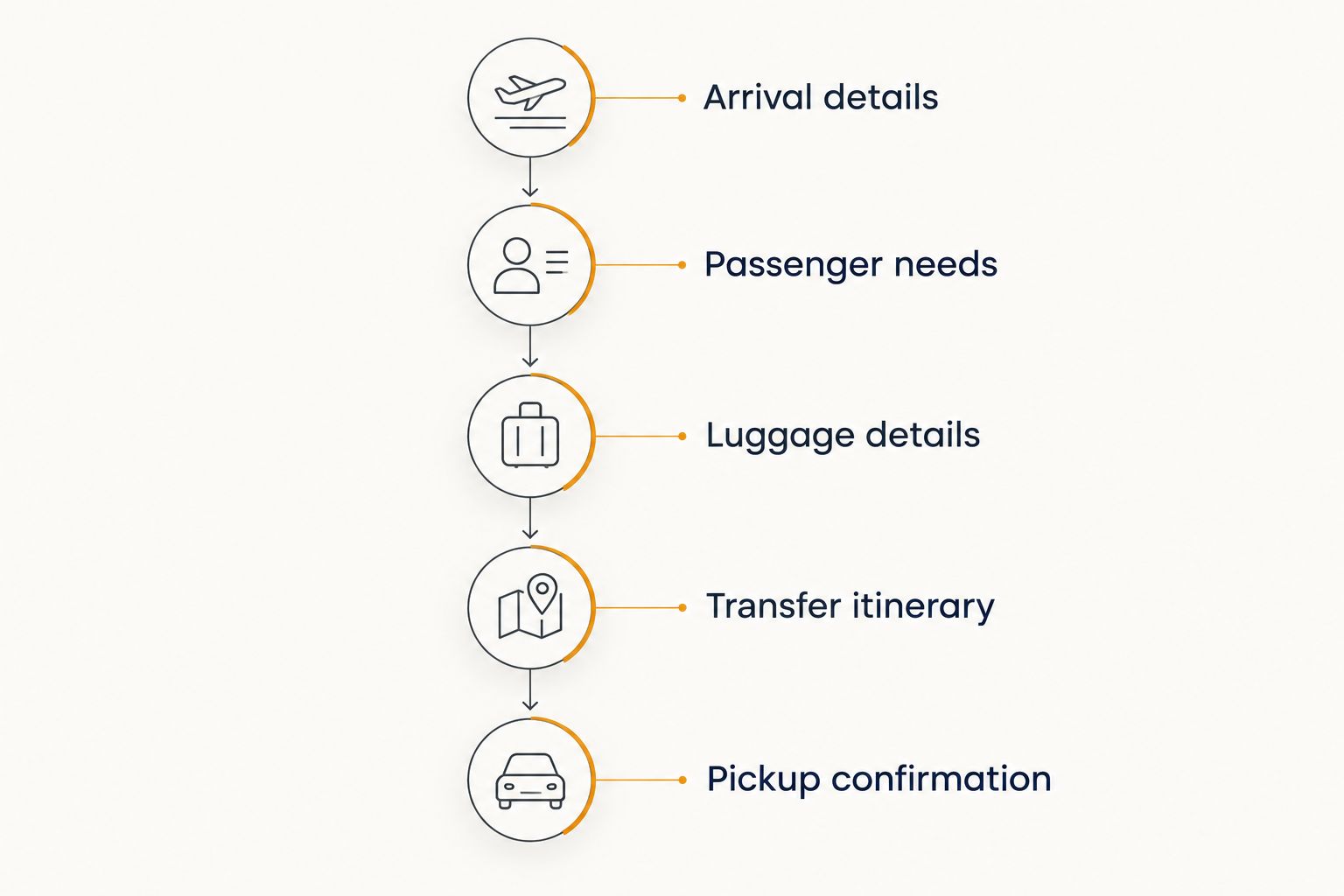
A well-chosen category still needs a clear booking brief. For a 2026 itinerary, work through these details in order:
- Arrival details: Supply the flight information and explain whether your party arrives together or separately. Ask how changes should be communicated.
- Passenger needs: State the full party size, child-restraint requirements, and boarding assistance needs.
- Luggage details: List bags and bulky items. Request confirmation that the proposed vehicle accommodates the complete load.
- Transfer itinerary: Give the destination, any intermediate stops, and the return journey. For a round trip, describe both transfer legs rather than assuming they are identical.
- Pickup confirmation: Confirm the meeting instructions, contact method, and responsibilities if plans change.
Luxortrans brings 8 years serving clients and transportation-industry experience since 2006 to its Oahu service. Its stated focus includes discreet VIP travel, dependable airport coordination, higher-end vehicles, and local island knowledge. Those service priorities help define the brief; you should still confirm the assigned vehicle and trip-specific arrangements.
Request your Oahu transportation quote
Request a quote for seamless Oahu transportation.
Which airport vehicle should you choose?
Start with a private sedan if you are traveling individually or as a couple with light luggage. Move to an SUV when bulky belongings require a different layout, a passenger van when your party should stay together, or a coach when you are coordinating a delegation.
Choose a limousine for an occasion-led journey and a taxi for a simple independent transfer. Whatever the category, the decisive question is the same: does the confirmed vehicle accommodate your passengers, belongings, and itinerary?
FAQ
What's the best Oahu airport vehicle for a couple?
A private sedan is the default starting point for a couple with light luggage. Confirm the assigned vehicle can accommodate your bags, especially if you are carrying bulky items.
Is an SUV better than a sedan for airport luggage?
An SUV is a category to assess when bulky luggage does not suit a sedan. Usable cargo space depends on the specific vehicle and the seating arrangement, so provide your complete luggage list.
Should my group choose a passenger van or a coach?
Choose a passenger van for a shared party that fits the confirmed vehicle; assess a coach for a larger organized delegation. Passenger count, baggage, arrival patterns, and destination access should determine the choice.
Does a limousine have more luggage space?
The limousine label does not establish luggage capacity. Confirm the proposed vehicle's body style and baggage fit before choosing it for an airport transfer.
Does Luxortrans take transportation reservations overnight?
Luxortrans transportation service, phone support, and reservations operate 24 hours a day. Those operating hours are not a guarantee of a particular vehicle, pickup time, or arrival time.
What should I send when requesting an airport transfer quote?
Send your flight details, passenger count, luggage list, destination, and any boarding or child-restraint requirements. Include intermediate stops and the return journey when they form part of your itinerary.
Can I use the same provider for airport and event transportation?
Luxortrans provides Oahu airport, hotel, corporate, wedding, and private-event transportation. Request a coordinated itinerary and confirm the vehicles and arrangements for each journey.
One last thing
Your return transfer can need a different brief from your arrival. Passengers can depart on separate flights, destinations can change, and the group you brought to an event might not leave together.
For your 2026 visit, send Luxortrans both journeys before settling on a vehicle category. A clear return plan makes the airport transportation decision about your entire stay, not just the moment you land.