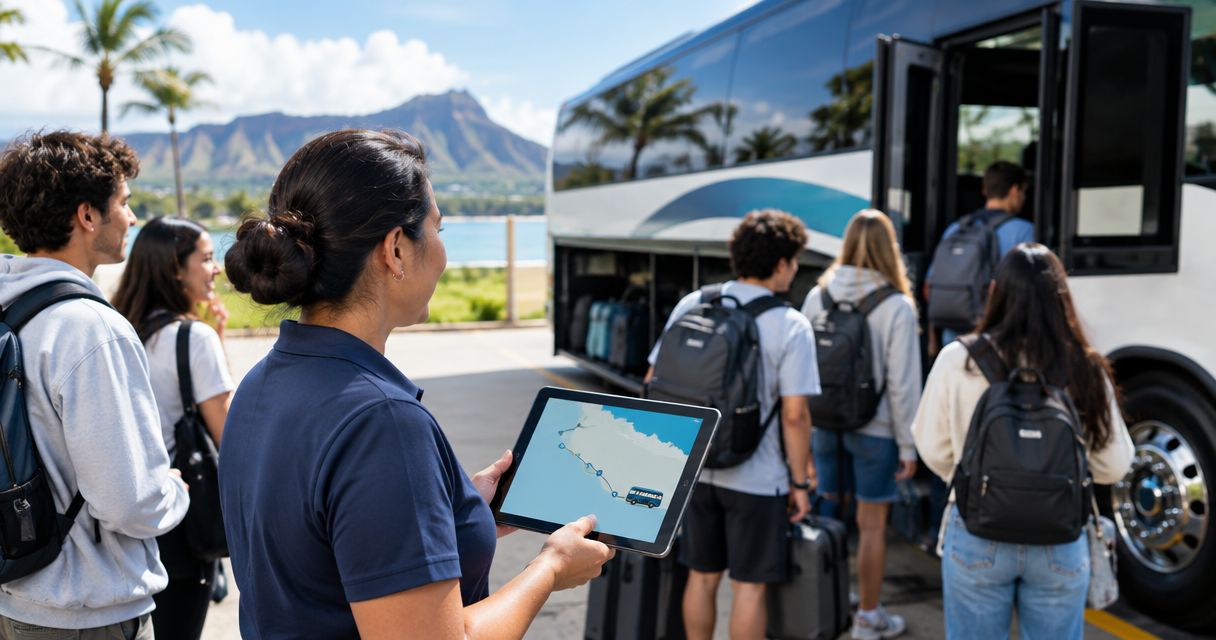

Wedding planners’ wedding transportation is the coordination of guest, couple, and wedding-party travel with the aim of keeping every movement aligned with the celebration. For your 2026 Oahu wedding, genuine island hospitality starts with a clear arrival plan, discreet service, and thoughtful arrangements for guests traveling between airports, hotels, and venues.
- Wedding transportation for wedding planners starts with a guest manifest, confirmed venue access, and separate arrival and departure plans.
- Luxortrans suits Oahu planners seeking wedding transportation, airport coordination, and private transfers through one provider.
- Match vehicles to passenger needs and luggage, not headcount alone.
- Confirm pickup instructions and responsibility for schedule changes before sharing the final itinerary.
Why wedding transportation matters for wedding planners
A wedding transport plan must connect movements with different priorities: airport arrivals, ceremony entrances, guest transfers, and departures after the reception. Your couple needs discretion; guests need understandable instructions; venue teams need vehicles to arrive at an agreed loading point.
Plan around each movement, not just the vehicle reservation. A vehicle assignment does not answer who checks passengers aboard, who authorizes a delay, or where a chauffeur waits when the venue entrance is occupied.
For Oahu celebrations with several guest groups, review ground transportation options by group size before deciding whether everyone should travel together. Separate arrangements can serve different needs without forcing every guest onto the same schedule.
Your 2026 planning brief should connect the transport provider, hotel contact, and venue coordinator through one approved itinerary. Keep passenger-facing directions separate from private operational notes so guests receive clarity without receiving the couple’s full schedule.
How to plan Oahu wedding transportation in 2026
Build your master movement plan
Start with a shared spreadsheet. Give each movement its own row, even when the same passengers and vehicle appear later in the day. An airport arrival, a hotel-to-ceremony transfer, and a reception departure are separate instructions.
Record the passenger group, origin, destination, required arrival event, and person responsible for the group. Distinguish confirmed information from open questions rather than letting a blank cell look like approval.
Keep 1 master manifest as the working reference. Copies sent to hotels or family members should carry a revision date, and only your designated transport lead should approve operational changes. This prevents a well-intentioned guest from turning a private request into an instruction for the entire wedding party.
- List each movement separately, including the return journey.
- Separate guest names from private couple and VIP details.
- Record hotel names and specific pickup entrances.
- Assign a passenger contact to each group.
- Mark unconfirmed details clearly before requesting vehicle assignments.
Confirm venue access before choosing vehicles
Ask each venue for its transport instructions directly. A street address identifies the property; it does not establish the correct driveway, loading area, or permitted place to wait. Share those instructions with the transport provider before settling the vehicle plan.
Resolve venue access, loading points, and waiting arrangements in that order. A larger vehicle is useful only when its access and passenger-loading arrangements work for the property. Do not assume a location used during a site visit will also serve the wedding-day operation.
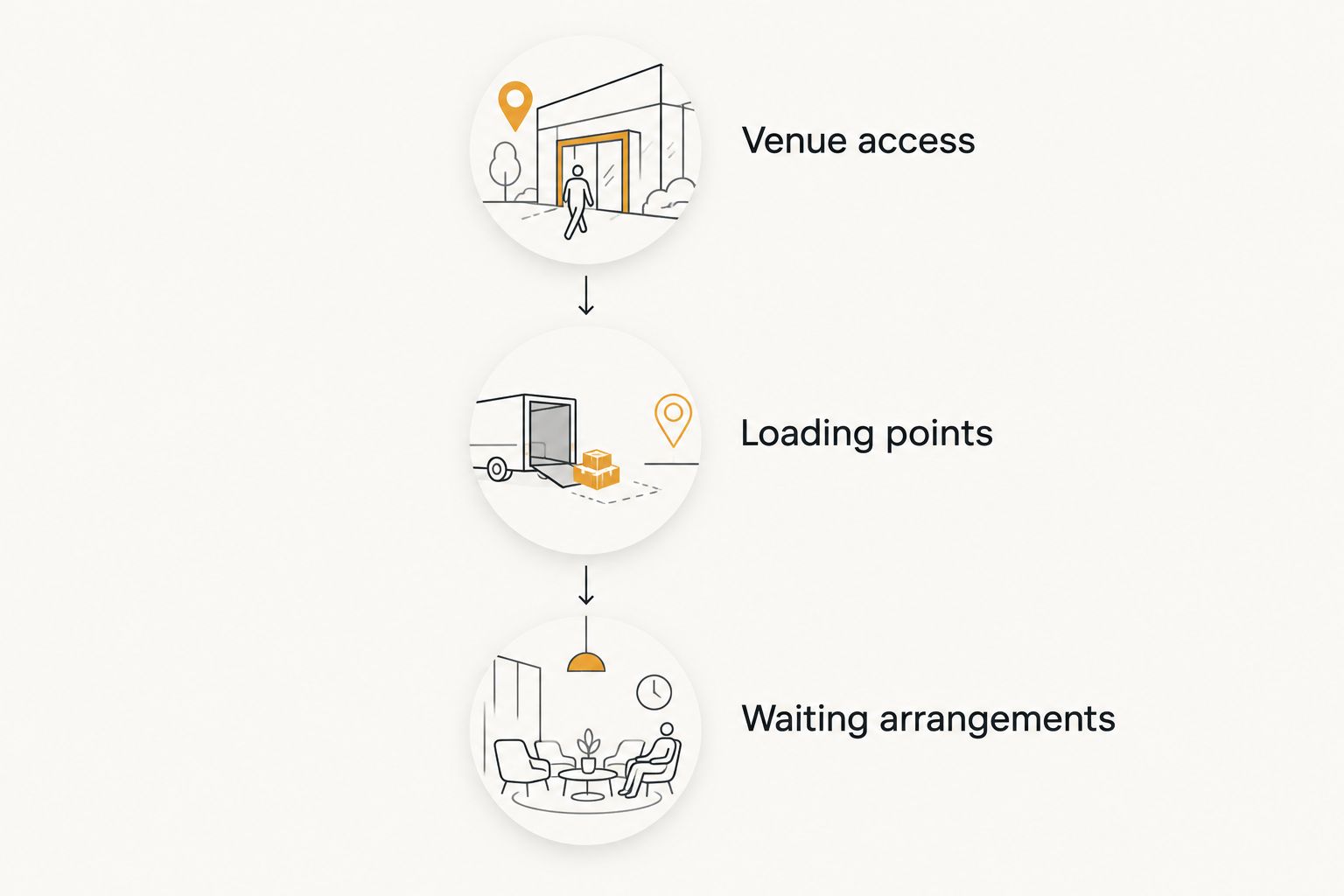
For your 2026 venue briefing, ask who can approve a change if the original loading point becomes unusable. Keep that person’s contact details in the operational itinerary, not only in an email thread.
- Obtain the approved passenger-loading location from each venue.
- Ask about vehicle access restrictions and turning space.
- Confirm where vehicles can wait between movements.
- Identify a venue contact for access changes.
- Share entrance instructions with chauffeurs and passenger leads.
Match the provider and vehicle to each group
Use your manifest to compare vehicle approaches manually before requesting a proposal. Separate couple travel, wedding-party movements, guest groups, and airport transfers; then identify which movements benefit from traveling together.
Luxortrans wedding transportation is best for Oahu planners coordinating private transfers and group travel through one provider. Its service scope includes airport transfers, hotel transfers, and private events, supported by discreet VIP service, higher-end vehicles, professional chauffeurs, and local Oahu knowledge.
That scope offers a direct route from your planning sheet to a coordinated service request. It does not replace movement-by-movement confirmation: ask for the proposed vehicle, passenger and luggage fit, accessibility arrangements, and written service scope before approving the plan.
- Describe passengers and luggage rather than requesting a vehicle by appearance alone.
- Flag formalwear, mobility aids, and child-restraint requirements.
- Request private arrangements for the couple when discretion matters.
- Ask how group movements and airport transfers will be coordinated.
- Confirm the proposed vehicle assignment in writing.
Build the schedule backward from required arrivals
Start with the event that cannot move, such as the ceremony entrance or a scheduled photography session. Work backward with the venue and transport provider to establish loading, travel, unloading, and preparation requirements. Do not substitute a map estimate for a complete movement plan.
Keep guest transportation separate from the couple’s preparation schedule. Guests who reach the property still need directions to the ceremony area, while the wedding party might need a different entrance or holding location.
For a 2026 itinerary, label each time by its purpose: passenger ready time, departure instruction, or required arrival. An unexplained time invites different interpretations. Ask the provider to review the sequence rather than treating your first draft as a confirmed operating schedule.
- Identify the required arrival event for every movement.
- Ask the provider to assess route and loading requirements.
- Include unloading and the walk to the event area.
- Separate photography movements from guest shuttle instructions.
- Obtain approval before publishing the final transport schedule.
Write pickup instructions guests can follow
Draft guest instructions in a simple document before moving them into your wedding website, email, or printed welcome materials. Each message should answer where to stand, which group it serves, what destination it reaches, and whom to contact with a problem.
Use the same location wording across every channel. A hotel lobby, main driveway, and designated transport entrance are not interchangeable instructions. If the venue supplies a named pickup location, preserve that wording.
Give guests the information they need without publishing private passenger lists or the couple’s movements. Hotel concierges can help relay agreed instructions, but your operational plan should identify whether hotel staff have accepted any passenger-coordination responsibility.
- Name the pickup entrance precisely.
- State the destination and intended passenger group.
- Provide the passenger-ready instruction separately from the event start.
- Include the designated transport contact.
- Send changes through the same approved communication channel.
Assign responsibility for changes
Create a contact sheet manually and attach it to the operating itinerary. Assign 2 named contacts: a planner-side decision-maker and a provider-side operational contact. Add venue and hotel contacts where their approval affects loading or access.
Luxortrans transportation service, phone support, and reservations operate 24 hours a day. This supports communication across arrival schedules, but operating hours are not a promise of a particular pickup time or vehicle assignment. Confirm the arrangements for your wedding in writing.
Decide who can approve an extra stop, a delayed departure, or a passenger reassignment. A family member’s request should reach the authorized planner rather than become a competing instruction. Keep the couple outside routine transport decisions unless their approval is genuinely required.
- Name the person authorized to approve itinerary changes.
- Confirm the provider’s operational contact procedure.
- Identify a backup planner contact.
- Record who communicates changes to guests.
- Document approved changes in the master itinerary.
Close the return and airport-transfer plan
Plan departures with the same care as arrivals. Separate reception returns from later airport movements, and check whether passengers return to the same hotel where they were collected. Luggage and accompanying guests can differ between those journeys.
For destination weddings, ask guests for confirmed flight information through your chosen planning process. Share only the information needed for transport coordination, and clarify who must report a flight change.
Before releasing the final 2026 itinerary, review each movement from the passenger’s perspective. Can that person find the pickup, recognize the correct group, and reach a responsible contact? A polished vehicle cannot compensate for missing instructions at the end of a long celebration.
- Confirm return destinations rather than copying outbound addresses.
- Separate early departures from the main guest return.
- Record luggage requirements for airport journeys.
- Assign responsibility for reporting flight changes.
- Reconcile the final itinerary with the provider’s written confirmation.
Compare wedding transportation approaches
Choose the approach that fits the movement, not one vehicle type for the entire wedding. The same celebration can justify private couple travel, coordinated guest vehicles, and separate airport transfers.
| Option | Best for | Main advantage | Key limitation |
|---|---|---|---|
| Private car or limousine | Couple and discreet VIP movements | Keeps a private itinerary separate from guest travel | Does not consolidate the wider guest group |
| Coordinated coach transportation | Guests sharing an origin and destination | Gives the group a common transport plan | Requires confirmed access and clear boarding instructions |
| Guest-arranged taxis | Independent guest schedules | Lets guests organize their own journeys | Leaves the planner without one shared movement plan |
| Luxortrans coordinated transportation | Oahu weddings combining private and group movements | Brings airport, hotel, and private-event travel into one provider brief | Each movement and vehicle arrangement still needs written confirmation |
Use a mixed plan when your passengers have different needs. Consolidation is useful for a shared guest departure; privacy matters more for a couple moving between preparation, photography, and the ceremony. Neither approach should dictate the other.
Request a quote for seamless Oahu transportation.
Request your wedding transportation quote
Share your Oahu venues, guest groups, airport transfers, and private travel requirements.
Common mistakes wedding planners make
Choosing by passenger count alone
A headcount leaves out luggage, formalwear, mobility aids, and the practicalities of boarding. Ask the provider to assess the complete passenger requirements before accepting a vehicle proposal.
Confirm fit, not just seats. Keep those requirements attached to the movement so they remain visible when a passenger group changes.
Giving everyone the couple’s schedule
The couple’s photography and preparation schedule is not a guest transport brief. Sharing it widely creates unnecessary detail and exposes private movements.
Issue audience-specific instructions instead. Guests need their pickup and return arrangements; chauffeurs and authorized coordinators need the operational details relevant to their responsibilities.
Treating the ceremony arrival as the whole assignment
A successful arrival does not resolve reception departures, hotel returns, or airport travel after the wedding. Missing return instructions leave guests asking the planner to make transport decisions during the celebration.
Confirm the final destination and responsible contact for every return movement. Treat each return as an approved assignment, not an assumed reversal of the outbound trip.
Letting several people direct the chauffeur
A parent requesting another stop and a planner expecting an immediate departure create conflicting instructions. Discretion does not mean accepting changes without authorization.
Establish the decision-maker before the wedding. Tell family contacts how to request a change, and ask the provider to direct competing instructions to that person.
FAQ
What is wedding transportation for wedding planners?
Wedding transportation for wedding planners is the coordination of couple, wedding-party, and guest movements around the event itinerary. It includes passenger assignments, vehicle requirements, pickup instructions, venue access, and return journeys.
Should all wedding guests travel in the same vehicle?
No, wedding guests do not need to travel in the same vehicle. Group passengers by origin, destination, and movement requirements, then confirm suitable arrangements with the transport provider.
Is a limousine or coach better for an Oahu wedding?
A limousine suits private couple or VIP movements, while a coach suits guests traveling together. Confirm passenger requirements, luggage, and venue access before choosing either approach.
What should I send when requesting a wedding transportation quote?
Send the wedding date, movement list, passenger groups, pickup and destination details, and required arrival events. Include luggage, accessibility needs, private travel requests, and return journeys so the proposal addresses the full assignment.
Does Luxortrans provide transportation support around the clock?
Luxortrans transportation service, phone support, and reservations operate 24 hours a day. Confirm your specific itinerary and vehicle arrangements separately; operating hours do not guarantee pickup or arrival timing.
Who should approve wedding-day transportation changes?
A designated planner-side decision-maker should approve wedding-day transportation changes. Give the provider that person’s contact details and identify a backup before the event.
How do I coordinate airport transfers with wedding transportation?
Treat airport transfers as separate movements within the master itinerary. Record flight information, passenger names, luggage requirements, hotel destinations, and responsibility for communicating changes.
One last thing
Read the itinerary backward before you approve it. Start with the final guest reaching the correct destination, then check every preceding handoff. This exposes return trips and communication gaps that a ceremony-first review overlooks.
For your 2026 wedding, bring that checked itinerary to Luxortrans with the couple’s privacy requirements and each group’s needs. Request a quote for seamless Oahu transportation.