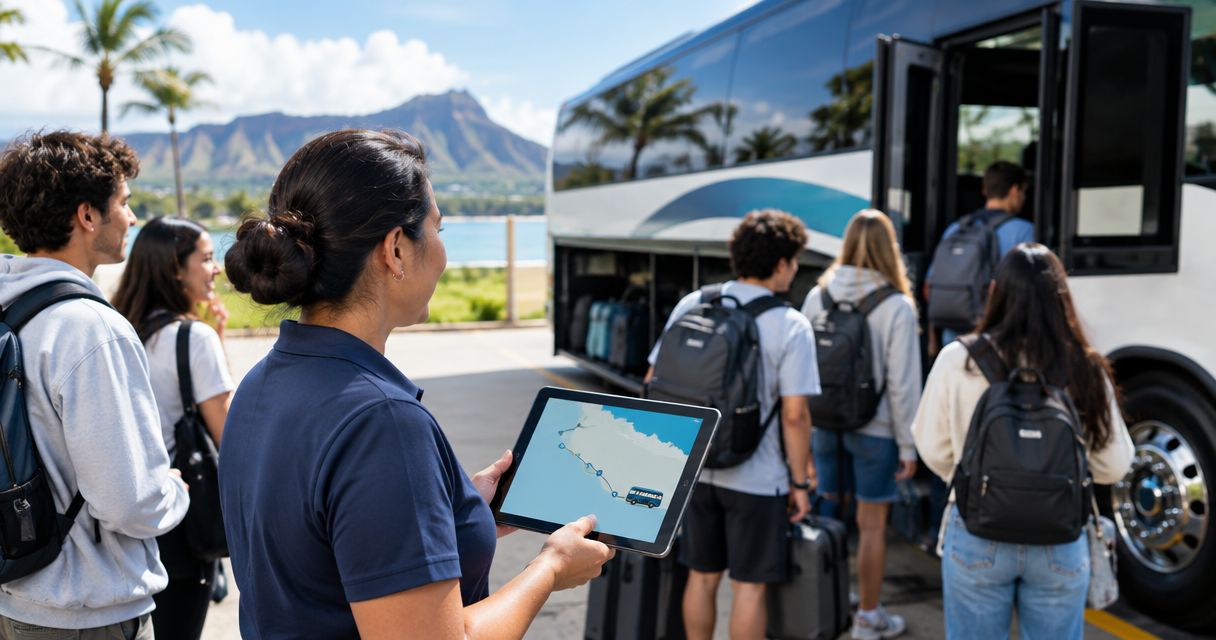

School group organizers’ charter bus service is prearranged group transportation designed to move students and accompanying adults through a shared itinerary with clear supervision and handoffs. For an Oahu visit, genuine island hospitality starts with dependable airport coordination, an appropriate vehicle, and an arrival-to-destination plan that respects your school’s requirements.
- Charter bus service for school group organizers starts with school approval, passenger requirements, and a written itinerary.
- Luxortrans suits Oahu planners seeking coordinated airport transfers, hotel transfers, and private-event transportation; confirm school-specific requirements before booking.
- Choose group transportation by approved passenger capacity, luggage needs, accessibility, and supervision—not vehicle appearance.
- Confirm pickup instructions, itinerary changes, and student handoffs in writing before travel.
Why charter bus service matters for school group organizers
A school trip is not simply a passenger transfer. You must account for students, chaperones, luggage, school approval, and the adults responsible at each destination. A vehicle reservation alone does not resolve those responsibilities.
For your 2026 Oahu itinerary, separate transportation coordination from student supervision. The provider manages the agreed transportation service; your school assigns responsibility for attendance, conduct, medical information, and student release. Confirm that division before accepting a proposal.
Luxortrans provides Oahu ground transportation for individuals and groups, including airport transfers, hotel transfers, and private events. Its transportation service, phone support, and reservations operate 24 hours a day. That operating schedule is not a promise that a particular vehicle or departure time can be accommodated.
Choose the transportation arrangement your school can approve and your chaperones can manage. Premium vehicles are useful only when the proposed service also fits the trip.
Plan your school group transportation in 2026
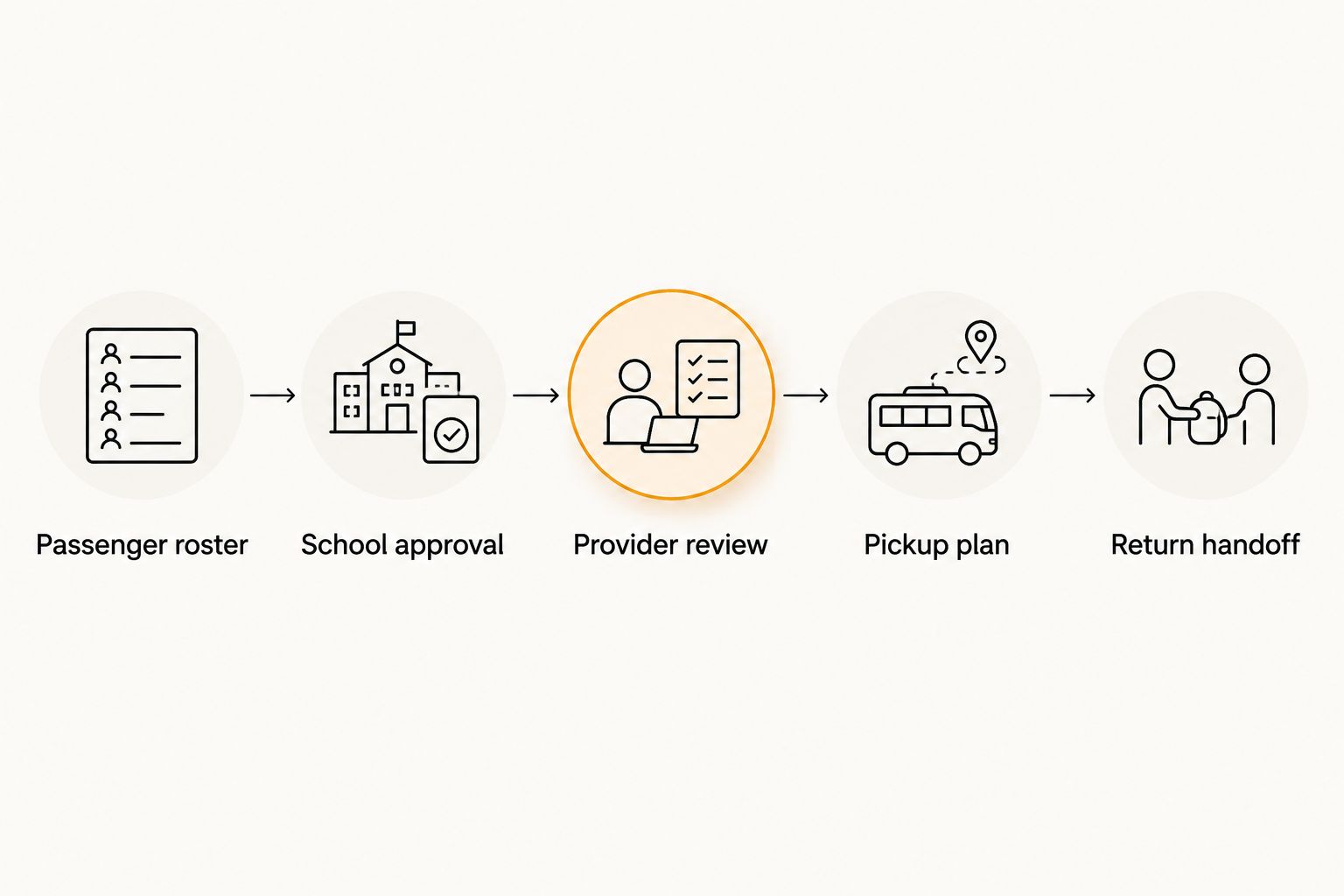
Begin with a shared document or spreadsheet. You do not need a booking platform to establish the essentials: passenger roster, school approval, provider review, pickup plan, and return handoff. Resolve those items before comparing vehicle presentation or additional conveniences.
Build your passenger roster
Start with the people traveling, not the vehicle you hope to reserve. Your working roster should distinguish students, school employees, chaperones, and any accompanying travelers whose seats must be included.
Record luggage and equipment separately. A passenger count does not describe instrument cases, sports equipment, or bags accompanying an airport arrival. Request confirmation that the proposed vehicle accommodates the complete load without obstructing passenger space or exits.
Keep sensitive information out of the general transport brief. Share only the assistance details the provider needs, using your school’s approved process for personal information.
- Passenger roster: Identify students, staff, and chaperones by travel group.
- Luggage inventory: Describe suitcases, instruments, and other equipment.
- Assistance needs: Record boarding and accessibility requirements privately.
- Supervision assignments: Name the adult responsible for each group.
- Roster ownership: Assign someone to maintain the current version.
Secure school approval
Use your school or district’s existing transportation process first. Ask the approving office what documentation is required for an Oahu charter arrangement, who can authorize it, and whether additional review applies to the intended passengers or vehicle type.
Do not treat a premium coach, limousine, taxi, or other vehicle as automatically appropriate for student transportation. The vehicle category, proposed operation, and school requirements must be reviewed together. Ask the provider for the documents your school requests rather than assuming a general service description establishes eligibility.
For a 2026 trip, obtain approval before committing the group to an arrangement. Keep the approval record with the final transportation documents so another staff member can understand what was accepted.
- School approval: Identify the person authorized to approve transportation.
- Required documents: Request the school’s provider-review checklist.
- Vehicle review: Confirm which vehicle types the school permits.
- Supervision rules: Establish conduct and student-release responsibilities.
- Written acceptance: Retain the approval and the accepted service scope.
Review your provider against the trip requirements
Create a short email brief and send the same requirements to each provider under consideration. Compare responses against your school’s checklist, not against different descriptions of the trip. An unanswered requirement needs clarification before selection.
Luxortrans is best suited to Oahu school-trip planners seeking coordinated airport, hotel, and private-event transportation. Its group transportation, local island knowledge, higher-end vehicles, and professional chauffeurs fit that planning brief; school-specific suitability still requires confirmation.
The company has served clients for 8 years, backed by transportation-industry experience since 2006. That background provides context, not a substitute for reviewing the proposed vehicle, documentation, and operating arrangements for your students.
- Provider review: Send the passenger, luggage, and itinerary brief.
- Vehicle details: Request the proposed vehicle type and passenger capacity.
- School requirements: Ask for a response to each approval condition.
- Service responsibility: Establish who operates each journey segment.
- Written scope: Record included transfers, stops, and coordination duties.
Match your vehicle to the full itinerary
List every journey separately: airport to hotel, hotel to activity, activity to the next destination, and the final departure transfer. A suitable airport arrangement does not automatically solve every movement during a school visit.
Compare a single-group movement with smaller coordinated movements only after reviewing supervision. Keeping everyone together simplifies roster checks; splitting the party creates separate departure lists and handoffs. Neither arrangement removes the need to confirm passenger capacity and equipment space.
Ask how the service handles gaps between activities. Do not assume the vehicle stays with the group, stores belongings during visits, or accepts added stops unless those arrangements appear in the written scope.
- Journey list: Record each origin, destination, and planned stop.
- Vehicle fit: Confirm seats, luggage space, and boarding requirements.
- Group divisions: Assign chaperones to every separate movement.
- Between-stop arrangements: Clarify waiting and belongings storage.
- Itinerary boundaries: Document which changes require further agreement.
Write your airport and hotel pickup plan
For an Oahu school visit in 2026, flight arrival and group readiness are different milestones. Students still need to assemble, collect belongings, and complete a roster check before the organizer can report that the group is ready.
Request specific meeting instructions from the provider and share the relevant details with chaperones. Confirm hotel loading arrangements with the property rather than assuming a coach can wait wherever the group gathers.
Keep student information out of public-facing instructions wherever possible. An organizer’s contact details and an agreed group identifier can support coordination without distributing the full passenger roster broadly.
- Pickup plan: Record the agreed meeting location and instructions.
- Arrival contact: Name the organizer who communicates group readiness.
- Flight details: Share the relevant flight and arrival information.
- Hotel loading: Confirm the property’s designated boarding arrangement.
- Boarding check: Complete attendance before authorizing departure.
Assign communication and contingency responsibilities
Build a contact sheet using your school’s approved tools. Name a primary organizer and a backup, then specify who communicates with the provider and who stays responsible for students during an interruption.
Ask how flight changes, delayed activities, missed connections, and vehicle substitutions are handled. You need the notification process and the decision-maker, not an unsupported promise that nothing will disrupt the itinerary.
For 2026 travel, retain a copy of essential instructions that designated staff can access without depending on a single phone. The provider’s 24-hour phone support is useful for communication, but it does not establish an emergency-response service or guarantee a revised journey.
- Primary contact: Assign the organizer authorized to communicate changes.
- Backup contact: Give another approved adult the essential instructions.
- Change process: Confirm how revised travel details are acknowledged.
- Substitution review: Ask how replacement arrangements are communicated.
- Emergency procedure: Follow the school’s approved response plan.
Confirm your return handoff
Work backward from the final destination and the person receiving responsibility for students. A return transfer is not complete merely because the vehicle reaches the agreed location; your school must also complete its attendance and release procedures.
Before departure, reconcile the final itinerary with the provider’s confirmation. Check dates, passenger requirements, luggage, destinations, contact names, and any agreed changes. Send chaperones the current version and clearly retire earlier copies.
Keep transportation confirmation separate from permission to release a student. Those are different decisions, and the school’s authorized adults should control the latter.
- Return handoff: Identify the receiving adult or school representative.
- Final itinerary: Match the school’s plan to the provider’s confirmation.
- Version control: Remove outdated instructions from active circulation.
- Attendance record: Check passengers before each departure and release.
- Belongings check: Assign a final review for bags and equipment.
Request a quote for seamless Oahu transportation
Share your school itinerary, passenger requirements, luggage needs, and approval conditions.
Compare transportation options for a school group
Compare operating arrangements, not appearance alone. The options below describe planning approaches, not confirmation that a particular provider offers every arrangement. Ask your school to approve the proposed service before booking.
| Option | Best for | Planning advantage | Key limitation |
|---|---|---|---|
| School-arranged transportation | Groups using an established school process | Keeps transportation review within the school’s existing procedures | Requires confirmation that the arrangement covers the proposed Oahu itinerary |
| Dedicated charter coach | Groups planning to travel together | Supports a shared itinerary and collective roster checks | Passenger capacity, luggage space, accessibility, and school suitability need confirmation |
| Coordinated smaller vehicles | Groups with different destinations or departure schedules | Allows separate movements when the itinerary requires them | Creates additional chaperone assignments and passenger handoffs |
| Luxortrans coordinated Oahu transportation | Visiting groups connecting airport, hotel, and private-event travel | Offers local coordination and group transportation through one provider | School-specific requirements, vehicle details, and each service segment must be agreed |
A dedicated vehicle arrangement reduces the number of separate movements you manage, but it does not transfer supervision to the driver. Smaller vehicles offer itinerary flexibility while increasing the coordination work assigned to your staff. Choose the trade-off your team can manage.
Common mistakes school group organizers make
Selecting the vehicle before checking school requirements
A polished vehicle presentation is not an approval document. Complete the school review first, then select among arrangements that meet the accepted requirements.
Counting students but omitting accompanying adults
Chaperones, teachers, and accompanying travelers all affect the passenger requirement. Submit the complete traveling party and describe equipment separately so the provider can assess the proposed vehicle accurately.
Treating an arrival time as a boarding instruction
A flight arrival does not tell students where to gather or tell the provider when everyone is ready. Agree on a meeting process and designate an organizer to communicate readiness after attendance is checked.
Assuming the vehicle remains throughout an activity
A transfer and a vehicle retained between stops are different arrangements. Confirm waiting, belongings storage, intermediate stops, and subsequent pickup instructions in writing.
Giving different adults different itinerary versions
Conflicting instructions create avoidable confusion at loading and release. Maintain a single current itinerary, identify its owner, and make sure every designated chaperone receives changes.
FAQ
What should school group organizers confirm before booking a charter bus?
Confirm school approval, the complete passenger requirement, luggage, accessibility needs, and the written itinerary before booking. Request the provider documentation your school requires and clarify who operates each journey segment.
Is a charter coach better than smaller vehicles for a school trip?
A charter coach suits a group traveling on a shared itinerary, while smaller vehicles suit separate movements. Compare both against supervision requirements, luggage, boarding needs, and the school’s approval conditions.
Can Luxortrans coordinate airport and hotel transportation for an Oahu school visit?
Luxortrans provides Oahu airport transfers, hotel transfers, and group transportation. Submit your school’s requirements for review and confirm the proposed vehicle and service scope before booking.
Does 24-hour transportation service guarantee my preferred pickup?
No, 24-hour transportation service, phone support, and reservations do not guarantee a particular vehicle or pickup time. Confirm the requested arrangement directly and retain the written confirmation.
Who supervises students during charter transportation?
Your school should assign student-supervision responsibilities to approved adults. Confirm conduct, attendance, boarding, and release procedures rather than assuming the chauffeur performs chaperone duties.
What belongs in a school transportation quote request?
Include travel dates, journey segments, student and adult passenger requirements, luggage, assistance needs, and school approval conditions. Ask the provider to identify the proposed vehicle and explain the process for itinerary changes.
What should organizers check again before a 2026 Oahu school trip?
Reconfirm the current itinerary, passenger requirements, pickup instructions, organizer contacts, and return handoff. Make sure designated staff have the same approved version and know how to communicate changes.
One last thing
Write the return handoff before the arrival greeting. Knowing who receives the students at the end forces you to resolve supervision, attendance, and release responsibilities throughout the journey. That is a stronger foundation for a welcoming Oahu visit than choosing a vehicle first.