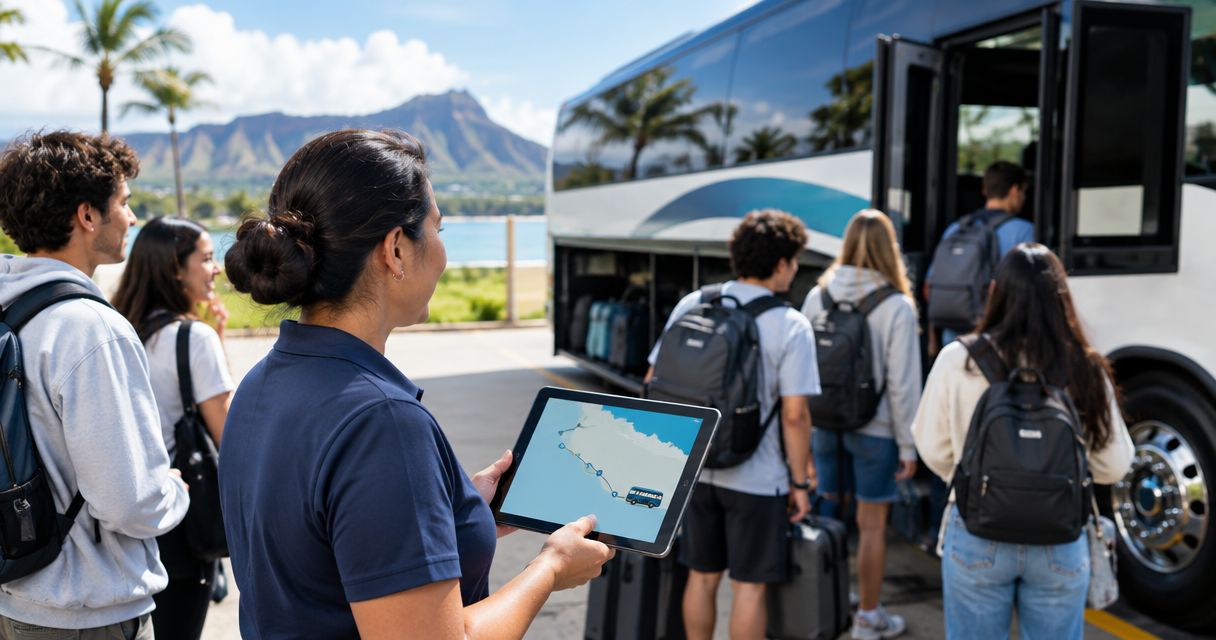

Genuine island hospitality starts with a clear handoff: instead of coordinating bags, passengers, and a driver separately, organize your cruise ship disembarkation transportation around a confirmed meeting point and a passenger-ready update. For your 2026 Oahu arrival, Luxortrans provides premium ground transportation for individuals and groups, with discreet VIP service and local island knowledge.
- Plan cruise ship disembarkation transportation around passenger readiness, not the ship’s scheduled arrival alone.
- Luxortrans suits Oahu travelers seeking premium ground transportation and discreet VIP service.
- Confirm the terminal, luggage count, destination, and meeting instructions before disembarkation.
- Keep airport transfers and hotel transfers separate when travelers have different deadlines.
Why this matters
A ship’s arrival time and your readiness to enter a vehicle are different events. You still need to follow the ship’s disembarkation instructions, collect your belongings, complete any required arrival procedures, and reach the agreed pickup area.
Build your pickup around the passenger handoff, not just the vessel schedule. That distinction gives your chauffeur useful information and keeps your group from treating an estimated docking time as a confirmed boarding time.
Luxortrans is best suited to Oahu travelers seeking premium ground transportation with discreet VIP service. Transportation service, phone support, and reservations operate 24 hours a day; that does not guarantee a particular vehicle, pickup time, or arrival time.
Before you start
- Gather your trip materials. Keep the cruise confirmation, current disembarkation instructions, destination address, and onward flight details together. For a 2026 booking, verify the actual travel date rather than copying an older itinerary.
- Choose 1 lead contact. Give that person the passenger list, luggage information, transportation confirmation, and a working phone. Assign a backup contact who can communicate if the lead contact loses service.
- Resolve the pickup-location gotcha. A terminal exit is not automatically an authorized vehicle boarding point. Ask for current meeting instructions and confirm how passengers should reach the agreed location before leaving the terminal area.
You do not need a new app to follow this workflow. Use a shared itinerary or a simple document, then send the relevant details through the communication method agreed with your transportation provider.
The bold labels below are suggested headings for your own planning document, not fields in a booking portal. Use them to keep requests consistent across your travel agent, concierge, group leader, and transportation contact.
Trip brief
Record the journey before requesting transportation
- Create a heading called Cruise arrival. Record the ship name, arrival date, scheduled arrival information, and terminal details supplied by the cruise line. Mark unconfirmed information clearly rather than filling gaps from memory.
- Add Passenger group. List the travelers sharing the transfer, the lead contact, and the backup contact. Ask each household to report its luggage instead of assuming everyone travels with the same amount.
- Add Luggage and assistance. Record suitcases, carry-ons, oversized items, mobility equipment, and any assistance requirements. Ask the provider to confirm whether the proposed arrangement meets those needs; do not infer accessibility from a vehicle’s appearance.
- Add Destination. Use the complete hotel address, private address, or airport destination. Include onward flight details when relevant, along with any intermediate stop you want considered.
Expected result: Your request describes the actual journey, not simply a headcount and a ship arrival time.
A useful request explains what must travel together. A family with substantial luggage and a group with several separate destinations create different coordination needs, even if their passenger totals match.
Keep sensitive details out of widely shared group messages. Share the necessary contact and journey information with the people handling the transfer, and keep identity documents in the appropriate travel records.
Choose the transfer structure
For your 2026 itinerary, decide whether the group has a shared destination or genuinely separate journeys. Do this before asking the provider to confirm the transport arrangement.
| Transfer structure | Best for | Advantage | Trade-off to resolve |
|---|---|---|---|
| Direct airport transfer | Travelers continuing to a flight | Keeps the journey focused on the airport destination | Requires a realistic connection assessment using current cruise and airline instructions |
| Direct hotel transfer | Travelers continuing their Oahu stay | Keeps the arrival handoff centered on the hotel | Hotel room readiness is separate from transportation |
| Split-group transfers | Travelers with different destinations or deadlines | Separates incompatible travel needs | Requires distinct passenger lists and pickup instructions |
These are planning choices, not confirmed service packages. Ask which arrangement fits your passengers, luggage, destinations, and requested travel date.
Pickup agreement
Confirm the handoff before disembarkation
- Send the trip brief and request a proposed pickup arrangement. Ask the provider to distinguish the requested pickup time from any timing that remains dependent on passenger release or terminal access.
- Create Meeting instructions. Record the agreed boarding location, how to identify the vehicle or chauffeur, and whom to contact if you cannot find the meeting point. Do not substitute a map pin for written instructions.
- Create Change contact. Confirm which communication method to use for a delay, destination change, or passenger-count correction. Ask who should receive the update rather than messaging several contacts independently.
- Create Service terms. Review the provider’s actual cancellation, waiting, and itinerary-change terms before accepting the arrangement. Keep the confirmation accessible to the lead contact.
Expected result: Everyone knows where the handoff happens, what remains conditional, and how to report a change.
Luxortrans offers premium Oahu ground transportation with professional chauffeurs and local island knowledge. The planning advantage is a provider focused on the ground journey; the limitation is that transportation coordination does not control cruise release procedures, terminal instructions, or airline requirements.
Do not treat a submitted request as a confirmed pickup. Keep the provider’s confirmation with the itinerary and resolve any unanswered questions before travel.
For a larger shore-side operation, the ground transportation guide for cruise excursion coordinators provides an adjacent planning topic for the person managing multiple passenger movements.
Disembarkation handoff
Send updates at the points that matter
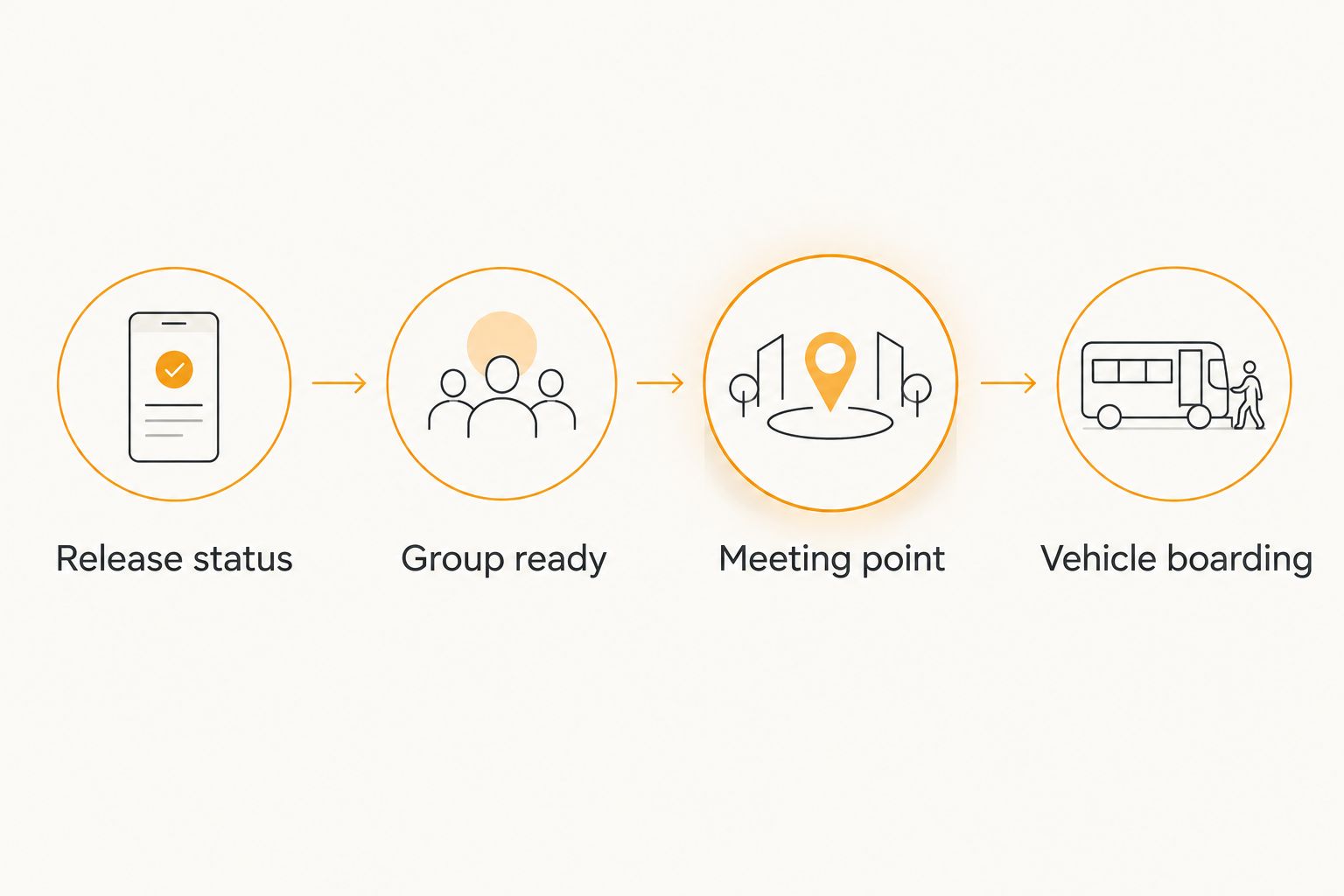
Use 2 readiness checkpoints: one when the group’s release status becomes clear, and another when passengers and luggage are together. These are recommended communication points, not promises about how quickly disembarkation will finish.
- Record Release status. Follow the cruise line’s instructions and notify the agreed transportation contact when your group’s status changes. Describe the current position accurately; being called to disembark is not the same as being ready to board a vehicle.
- Confirm Group ready. Count passengers, check that luggage is collected, and establish whether anyone still needs assistance. Send the update through the agreed channel.
- Verify Meeting point. Follow current terminal directions and the confirmed pickup instructions. If they conflict, stop and contact the provider rather than moving the group to an assumed alternative.
- Complete Vehicle boarding. Confirm you have the correct transport, check that the destination matches the itinerary, and account for people and luggage before departure.
Expected result: The chauffeur receives an actionable readiness update, and the group boards at the agreed location with the correct destination.
Keep the update short enough to act on: identify the booking, state the group’s current position, and explain the change or readiness status. Avoid declaring the whole party ready while someone is still collecting luggage.
For discreet VIP travel, agree on identification instructions directly with the provider. Do not assume a public name display, terminal escort, or a particular greeting arrangement unless it appears in your confirmation.
Destination handoff
Close the transfer without losing the details
- Reconfirm Destination before departure. Use the property name and address together, or the flight details needed for the airport journey. Correct a mismatch before the vehicle leaves.
- Check Onward arrangements. Keep hotel arrival instructions, airline requirements, and any next transfer accessible. A completed cruise transfer does not establish room access or flight eligibility.
- Complete Arrival check. Account for passengers, bags, mobility equipment, and personal belongings before the vehicle departs the destination.
- Update the trip organizer. Tell the travel agent, concierge, or designated planner that the handoff is complete if that communication forms part of your agreed plan.
Expected result: The transfer ends with the group and belongings at the intended destination, and the next responsible contact has the necessary update.
For a 2026 cruise-to-flight connection, assess the whole journey using current instructions from the cruise line, transportation provider, and airline. Do not build a flight connection from driving time alone. Passenger release, baggage collection, ground travel, and airport procedures all need consideration.
When disembarkation plans change
The same workflow also works when the ship’s instructions change after transportation has been arranged. Preserve the confirmed details and change only the affected parts; replacing the entire itinerary can obscure what still applies.
- Update Cruise arrival with the new information received from the cruise line.
- Tell the agreed transportation contact what changed, including the date or terminal if affected.
- Ask for a revised pickup arrangement and reconfirm the destination and passenger group.
- Send the revised instructions to travelers, clearly identifying them as the current version.
Expected result: Passengers and the transportation contact work from the same revised plan, rather than different message threads.
For a 2026 group itinerary with multiple households, ask travelers to report changes to the lead contact first. Separate updates about luggage, flights, and hotel destinations are easier to reconcile before they become conflicting pickup requests.
Troubleshooting
The ship is alongside, but passengers cannot leave
Report that the group has not been released. Ask the provider how the existing arrangement should be handled under its confirmed terms, and do not send a passenger-ready update prematurely.
The group reaches a different exit
Remain in a location permitted by terminal staff and contact the provider. Describe your position using visible location information, then obtain revised meeting instructions instead of walking toward a guessed vehicle location.
A traveler or suitcase is missing
Tell the lead contact before boarding. Establish whether the group will remain together or needs a revised arrangement, and ask the provider to confirm the implications before splitting passengers.
The lead contact loses phone service
Use the designated backup contact and the saved confirmation. Keep the meeting instructions accessible offline so a temporary connection problem does not erase the plan.
The vehicle arrangement does not match the luggage
Pause before loading and explain the mismatch to the provider. Request a confirmed solution; do not assume extra bags, oversized equipment, or additional passengers can be accommodated safely.
Customize your workflow
Build separate passenger lists when an airport-bound group and a hotel-bound group have different priorities. For families, identify who remains responsible for children and belongings during the handoff; for corporate or VIP travel, limit itinerary distribution to the necessary contacts.
Luxortrans provides airport, hotel, corporate, wedding, and private-event transportation, giving planners the option to coordinate several Oahu journeys with one provider. Confirm each journey individually rather than assuming the cruise transfer also covers later movements.
Request a quote for seamless Oahu transportation. Include your cruise date, passenger and luggage details, destination, and assistance requirements so the request reflects the full handoff.
Plan your Oahu pickup
Share your cruise details, passenger group, luggage, and destination for a transportation quote.
FAQ
How do I arrange cruise ship disembarkation transportation in Oahu?
Send your transportation provider the ship name, travel date, terminal information, passenger and luggage details, and destination. Confirm the meeting instructions and change-contact method before disembarkation.
Should I book my pickup for the ship’s scheduled arrival time?
Do not treat the ship’s scheduled arrival as your passenger-ready time. Agree on the pickup arrangement with the provider and explain how you will report release status and group readiness.
Where will my private driver meet me after the cruise?
Use the meeting location stated in your confirmed pickup instructions. Verify current terminal directions and contact the provider if the exit or boarding location differs from the plan.
Can I go directly from the cruise terminal to the airport?
Request a direct airport transfer and provide your onward flight details. Assess the connection using current cruise-line and airline instructions as well as the ground journey; driving time alone is not enough.
Does Luxortrans offer round-the-clock transportation support?
Luxortrans transportation service, phone support, and reservations operate 24 hours a day. This does not guarantee a particular vehicle, pickup time, or arrival time; confirm your requested arrangement directly.
What should I do if disembarkation is delayed?
Notify the agreed transportation contact as soon as your release status changes. Request updated instructions and follow the confirmed terms rather than assuming the original pickup arrangement remains unchanged.
What information should a group organizer collect before booking?
Collect the passenger list, luggage details, destination addresses, assistance requirements, and onward flight information where relevant. Assign a lead contact and backup, then separate travelers whose destinations or deadlines require different transfers.
One last thing
The most useful final check is not another look at the ship’s arrival time. Ask whether every traveler can explain the meeting point and name the person responsible for contacting the provider.
Before your 2026 sailing ends, save the confirmed pickup instructions offline and share them with the backup contact. That small preparation preserves the handoff plan when the lead traveler’s phone is unavailable.