

Welcome your travelers with genuine island hospitality instead of repeatedly translating meeting invitations into pickup messages: build executive car dispatch for meetings around a shared movement record, provider confirmation, and controlled updates. This 2026 workflow connects your Oahu meeting itinerary to clear chauffeur instructions while keeping confidential agenda details out of the transportation brief.
- Luxortrans suits Oahu executive transportation planners who need discreet VIP service and coordinated airport, hotel, and meeting travel.
- Executive car dispatch for meetings starts with a movement record, not a forwarded calendar invitation.
- Separate meeting start, required arrival, and pickup times; confirm each transportation leg with your provider.
- Assign one approval owner and record provider acknowledgment whenever the itinerary changes.
Why this matters
A meeting invitation describes an appointment. A dispatch brief must describe the journey: who travels, where the vehicle meets them, when they need to arrive, and who can approve changes. Sending the invitation alone leaves those decisions unresolved.
Luxortrans is best suited to Oahu executive transportation planners seeking discreet VIP service and coordinated airport, hotel, and meeting travel. Start with Luxortrans when your itinerary needs higher-end vehicles, professional chauffeurs, and local island knowledge across individual and group movements.
The workflow below is a planning method, not a software integration. The bold field names are labels you create in your own worksheet or planning document; they are not claimed features of a provider portal. For your 2026 travel program, keep that distinction explicit: an internal record organizes the request, while provider confirmation establishes the transportation arrangement.
Before you start
- Gather the working itinerary and venue details. Have access to meeting invitations, hotel and office addresses, flight details where relevant, passenger counts, luggage requirements, and authorized traveler contact information.
- Assign approval and day-of contacts. Record 2 contact roles: the person authorized to approve itinerary changes and the person reachable during the movement. One person can fill both roles, but identify each responsibility.
- Resolve the time-zone trap. A calendar invitation viewed off-island can display a different local time. Write the travel date and Hawaii local time explicitly, and distinguish the meeting start from the required arrival and pickup times.
Do not distribute the full executive calendar to everyone involved. Prepare a transportation-only brief containing the details needed to arrange and perform the journey, with access limited to the appropriate recipients.
Configuration unit: Movement record
- Create the master record. Use a worksheet or document your planning team can maintain. Add Movement ID, Travel date, Revision, and Approval owner. Give each journey a stable identifier so a revised pickup does not look like a new booking.
- Separate the journeys. Use 1 movement per row. A hotel-to-meeting journey and its return belong in separate rows, even when the same travelers make both trips.
- Enter the endpoints. Add Pickup address, Pickup point, Destination address, and Destination entrance. Specify the intended hotel entrance, office reception point, or event access location rather than relying on a building name alone.
- Record traveler requirements. Add Passenger count, Luggage, Accessibility requirements, and Traveler contact. Share only relevant operational details; do not place medical histories or confidential meeting subjects in the record.
For example, a movement dated September 15, 2026 should remain identifiable after its meeting room or departure point changes. Keep its identifier stable and revise the operational details beneath it.
Expected result: Every requested journey has an identifiable date, origin, destination, passenger requirement, and accountable owner. Your team can discuss a single movement without forwarding an entire itinerary.
The essential planning fields
| Field | What you enter | What it prevents |
|---|---|---|
| Movement ID | A stable journey identifier | Confusion between revised and additional journeys |
| Pickup point | The agreed entrance or meeting location | Travelers and chauffeurs using different entrances |
| Required arrival | When the traveler needs to reach the destination | Treating meeting start as the arrival target |
| Passenger count | Everyone traveling on that leg | Carrying an outdated group requirement |
| Revision | The current version identifier | Acting on an earlier brief |
| Provider status | Requested, confirmed, or change pending | Treating an internal update as provider acceptance |
Configuration unit: Timing and vehicle requirements
- Separate the time fields. Create Meeting start, Required arrival, and Requested pickup. Ask the meeting host whether reception, security, preparation, or walking time affects the required arrival.
- Review the route with your provider. Supply the actual endpoints and required arrival. Ask for an appropriate pickup recommendation using local Oahu knowledge; do not substitute a universal transfer allowance for route-specific planning.
- Specify the vehicle requirement. Provide passenger count, luggage, and accessibility needs before requesting a vehicle arrangement. Identify whether travelers must remain together or can travel separately.
- Define the return movement. Enter a fixed return request when the departure time is known. When the meeting end remains uncertain, ask the provider how that uncertainty should be handled and record the agreed arrangement.
A meeting beginning at 10:00 a.m. is not automatically a request for arrival at 10:00 a.m. Those times answer different questions. Your host sets the arrival requirement; your transportation provider helps translate it into a pickup plan.
Expected result: The request states what the traveler needs without inventing a journey duration, vehicle capacity, or waiting arrangement. Unresolved timing questions remain visibly open rather than becoming assumptions.
Configuration unit: Dispatch brief and confirmation
- Prepare the Dispatch brief. Extract only the movement details needed by the provider. Include the revision, endpoints, requested timing, passenger requirements, and authorized contacts.
- Request Confirmation. Ask the provider to confirm the transportation details and identify anything still unresolved. Keep Provider status as requested until you receive acknowledgment of the arrangement.
- Check the confirmed details. Compare the response against the master record. Resolve discrepancies in dates, pickup points, traveler requirements, and return instructions before sharing the traveler-facing summary.
- Share the traveler summary. Provide the agreed pickup instructions and the appropriate day-of contact method. Exclude unrelated passenger information and confidential executive agenda details.
Use this handoff sequence in your 2026 planning document: Movement record, Dispatch brief, Confirmation, and Change log. These are workflow stages, not evidence of an automatic dispatch connection.
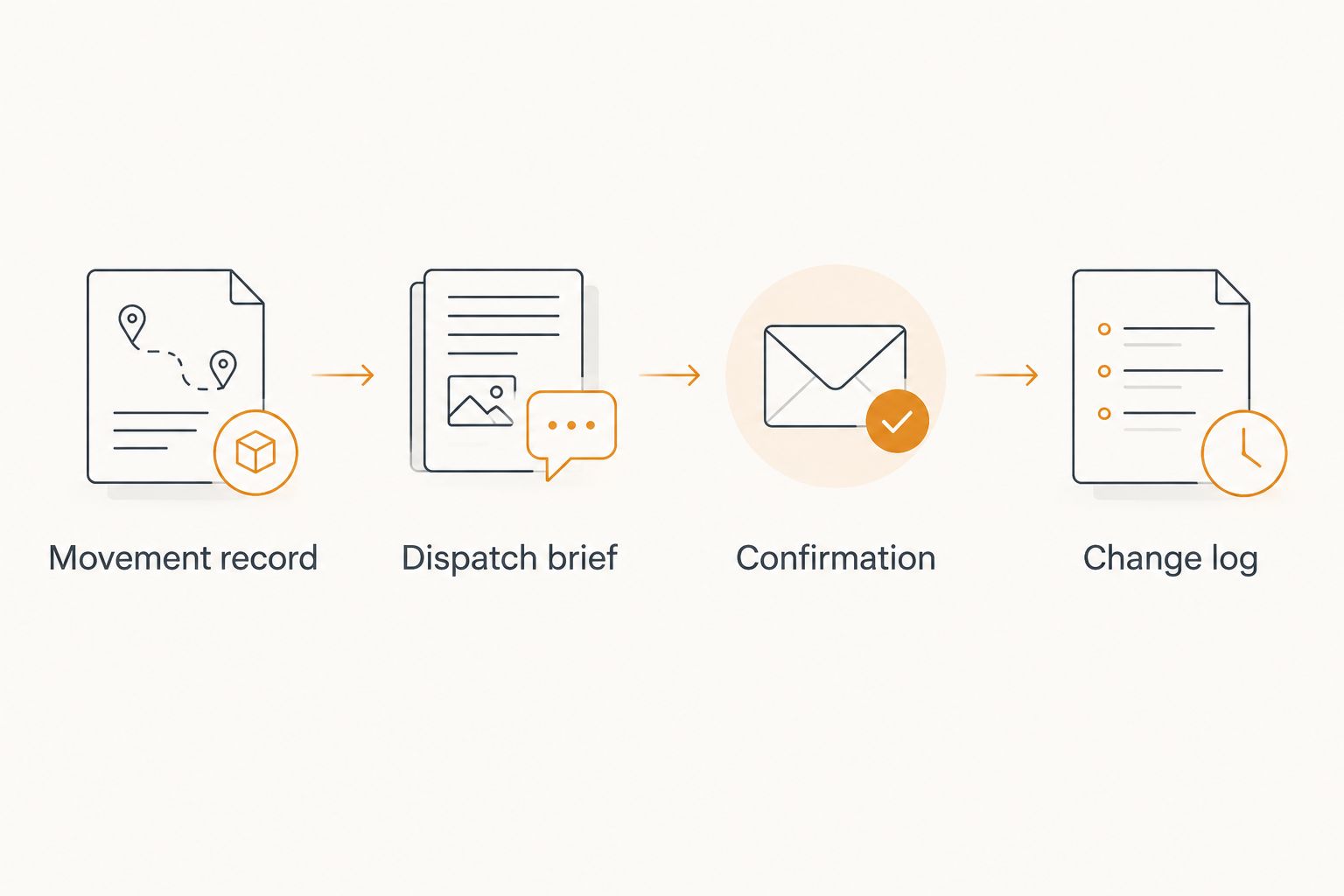
Expected result: The planner, provider, and traveler receive consistent instructions appropriate to their roles. The record distinguishes a request from a confirmed arrangement.
Luxortrans transportation service, phone support, and reservations operate 24 hours a day. That service schedule does not guarantee a particular vehicle, pickup time, or arrival time; confirm the arrangements for your itinerary directly.
Configuration unit: Change control
- Create the Change log. Record the affected movement, what changed, who approved it, and when you sent the revised request. Keep the latest revision clearly marked.
- Send a specific change request. State the previous instruction and its replacement. A message saying only that the meeting moved leaves the pickup requirement unclear.
- Track acknowledgment. Set Provider status to change pending until the provider acknowledges the revised arrangement. Do not present the new plan to travelers as confirmed before that happens.
- Replace outdated instructions. Update the traveler summary and notify the relevant hotel, concierge, or event contact. Mark earlier copies as superseded wherever your team controls them.
Expected result: A changed calendar event produces an explicit transportation review, not a silent assumption that the chauffeur received the update. Each affected journey has a visible current status.
Request a quote for seamless Oahu transportation. Share your meeting itinerary, passenger requirements, and known timing constraints so the transportation request starts with useful details.
Plan your Oahu meeting transportation
Share your meeting itinerary, passenger requirements, and pickup details for a coordinated transportation request.
Variant: Review dispatch whenever a meeting changes
For a changing 2026 executive itinerary, use calendar updates to trigger an internal review rather than an unconfirmed vehicle instruction. If your calendar supports change notifications, direct those notifications to the approval owner and review the affected movement record.
Check more than the edited meeting. A later finish can affect the return journey, the next appointment, and an airport departure movement. Review those dependencies individually instead of moving every pickup by the same amount.
| Workflow | Best for | Advantage | Limitation |
|---|---|---|---|
| Approved itinerary handoff | Planners with a settled meeting schedule | Creates a clear brief for provider review | Later changes require a separate update |
| Calendar-change review | Assistants managing a changing executive diary | Prompts review when an appointment changes | Notifications do not establish provider confirmation |
Choose the approved itinerary handoff for a settled schedule; choose calendar-change review when appointments remain fluid. Both workflows still require acknowledgment of transportation arrangements. Neither makes a calendar edit equivalent to dispatch approval.
When flights feed into the meeting schedule, use the flight-tracking and airport-pickup workflow to structure that separate handoff. A flight update and a meeting update affect different parts of the itinerary and should be reviewed accordingly.
Troubleshooting
The chauffeur brief shows an earlier meeting time
Compare the revision in the provider acknowledgment with the current movement record. Send the specific replacement instruction and request acknowledgment; do not resolve the mismatch by circulating another full calendar attachment without identifying the change.
The traveler waits at a different hotel entrance
Replace the general hotel name with an agreed Pickup point in the provider brief and traveler summary. Ask the property contact to clarify entrance names when necessary, then confirm that everyone is using the same description.
A meeting runs beyond the planned return departure
Contact the provider through the agreed day-of channel and request a revised arrangement. Do not assume the original vehicle will remain or that a calendar extension changes the transportation agreement.
A new attendee changes the vehicle requirement
Update Passenger count, luggage, and any relevant accessibility requirements, then request a review of the vehicle arrangement. Adding a traveler to an invitation does not communicate that change to the provider.
Different recipients read different pickup times
Replace ambiguous time references with the travel date and Hawaii local time. For example, write September 15, 2026 alongside the pickup instruction, then check that the provider brief and traveler summary match.
Customize your workflow
Extend the same movement record across airport, hotel, corporate, wedding, and private-event travel when those journeys belong to the same visit. Luxortrans provides those transportation services for individuals and groups, allowing planners to discuss connected journeys with one provider.
The benefit is a shared view of the transportation request. The limitation is that a shared itinerary does not resolve every operational question: each journey still needs its own timing, passenger requirements, and confirmation.
For a recurring 2026 executive travel program, save a blank template rather than reusing a previous guest's completed brief. Retain useful field labels and approval responsibilities; remove personal details and recheck every endpoint and requirement for the new visit.
FAQ
How do I turn a meeting itinerary into executive car dispatch?
Create a separate movement record for each journey, then send a transportation brief to your provider for confirmation. Include the travel date, endpoints, pickup point, required arrival, passenger requirements, and authorized contacts.
Does changing a calendar invitation update my chauffeur booking?
A calendar change is not confirmation of a revised transportation arrangement. Review the affected journey, send the specific change to your provider, and obtain acknowledgment before treating it as confirmed.
What information should an executive assistant send for meeting transportation?
Send the transportation details needed to plan the journey, not the full confidential agenda. Include pickup and destination instructions, timing requirements, passenger count, luggage, relevant accessibility needs, and authorized contacts.
Should the pickup time match the meeting start time?
No, pickup time and meeting start time serve different purposes. Establish the required arrival with the host, then discuss the pickup plan with the transportation provider.
Can I coordinate airport transfers and meeting transportation together?
Yes, you can include airport and meeting journeys in the same planning record while keeping each movement separate. Luxortrans provides Oahu airport, hotel, corporate, and private-event transportation for individuals and groups.
Can I contact transportation support outside business hours?
Luxortrans transportation service, phone support, and reservations operate 24 hours a day. Confirm your specific transportation arrangements directly; round-the-clock service does not guarantee a vehicle or particular timing.
How should I handle a meeting with an uncertain finish time?
Discuss the uncertain departure with your provider before finalizing the transportation arrangement. Record the agreed instructions and contact method rather than assuming the vehicle will wait.
One last thing
The most useful dispatch field is often the pickup point, not the meeting title. Before releasing the brief, read it as someone who has never seen the executive's calendar: can that person identify the traveler, the correct entrance, the agreed time, and the contact for a change?
If any answer requires searching an email chain, bring that detail into the current movement record.